Home & kitchen
How to Use a Wireless Meat Thermometer (and Which to Buy)
Insert the probe into the thickest part of the meat, away from bone, and cook to the USDA minimums: 165 °F (74 °C) for poultry, 160 °F (71 °C) for ground meat, and 145 °F (63 °C) plus a 3-minute rest for beef, pork and lamb steaks and roasts, and for fish.
A meat thermometer is the single cheapest way to stop overcooking a turkey, undercooking chicken or guessing at a steak. A wireless one goes further: the probe stays in the meat while you watch the temperature from the sofa, the table or across the garden, and an alarm tells you when it is ready. Here is how to use one properly and which type to buy.
Safe internal temperatures
These are the minimum internal temperatures recommended by the US Department of Agriculture (USDA):
- Poultry (turkey, chicken, duck), whole or ground: 165 °F / 74 °C.
- Ground meats (beef, pork, lamb burgers and sausages): 160 °F / 71 °C.
- Beef, pork, veal and lamb steaks, chops and roasts: 145 °F / 63 °C, then rest for 3 minutes.
- Fish and shellfish: 145 °F / 63 °C.
Many cooks take beef off earlier for medium-rare. That is a personal choice for whole cuts of beef, but never for poultry or ground meat.
Where to put the probe
- Insert it into the thickest part of the meat, which cooks last.
- Keep the tip away from bone, which conducts heat and reads high, and away from pockets of fat.
- For a whole turkey or chicken, go into the thickest part of the thigh without touching the bone, and check the breast too.
- For thin cuts such as chicken breasts or chops, insert the probe from the side.
Use carry-over cooking
Large roasts keep cooking after they leave the oven, often rising several degrees while they rest. Set your alarm a few degrees below your target for big joints, then let the meat rest under loose foil. You get juicier meat that still reaches a safe temperature.
Choosing a wireless thermometer
- Range. Radio (RF) thermometers with a handheld receiver often reach further than Bluetooth. If you grill outdoors and sit inside, check the listed range and remember walls reduce it.
- Number of probes. Two probes let you watch two pieces of meat, or the meat and the oven or grill temperature, at once.
- App or receiver. An app adds presets and alerts on your phone; a receiver works without a phone at all.
- Batteries. Note whether it uses AA, AAA or a rechargeable battery, and whether batteries are included.
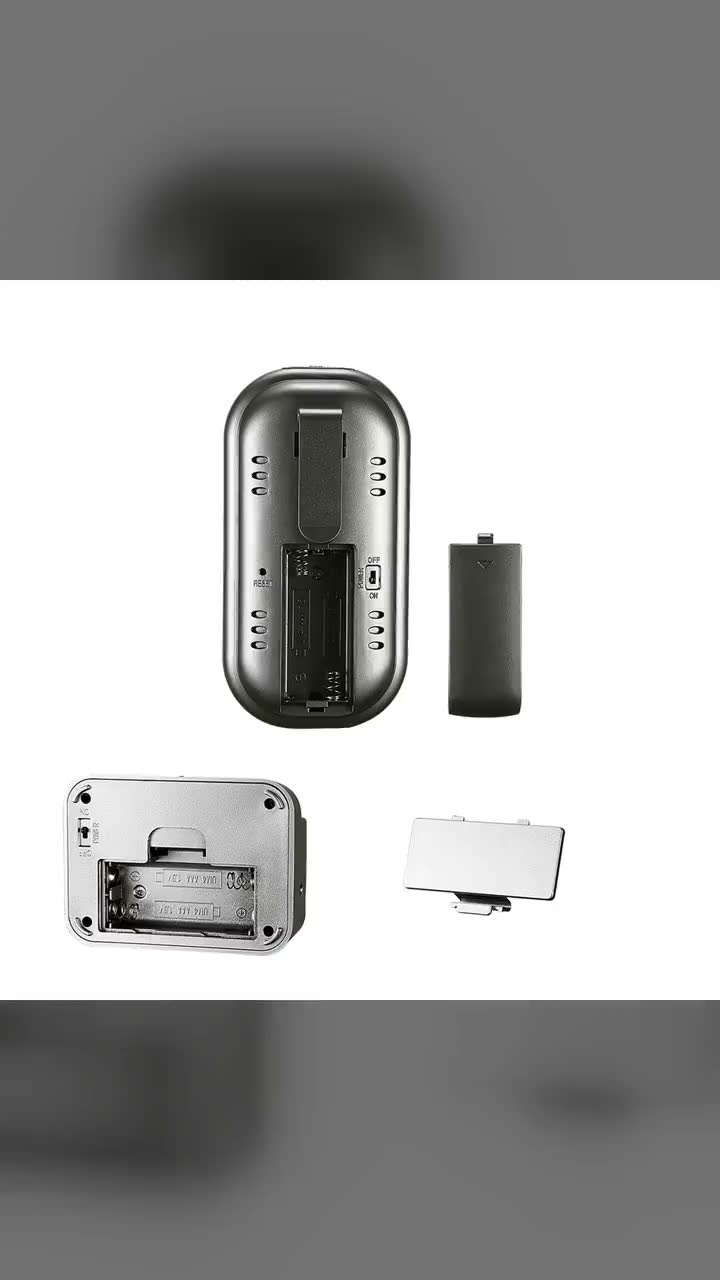 Wireless Barbecue ThermometerStainless probe, 0–250 °C range, ±1 °C accuracy and 20–30 m wireless range with timer.Watch the reel →
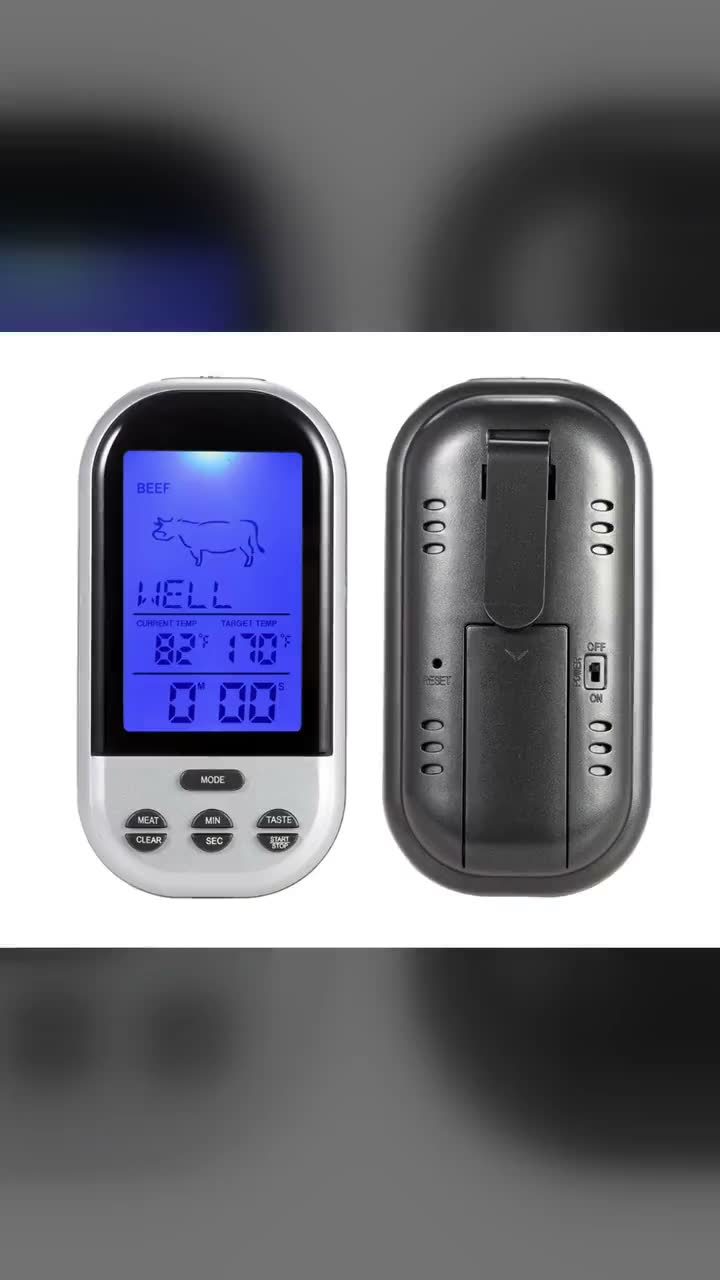 Wireless Fork Thermometer (1 or 2 Probes)A transmitter and handheld receiver, with single or double 304 steel probes.Watch the reel →
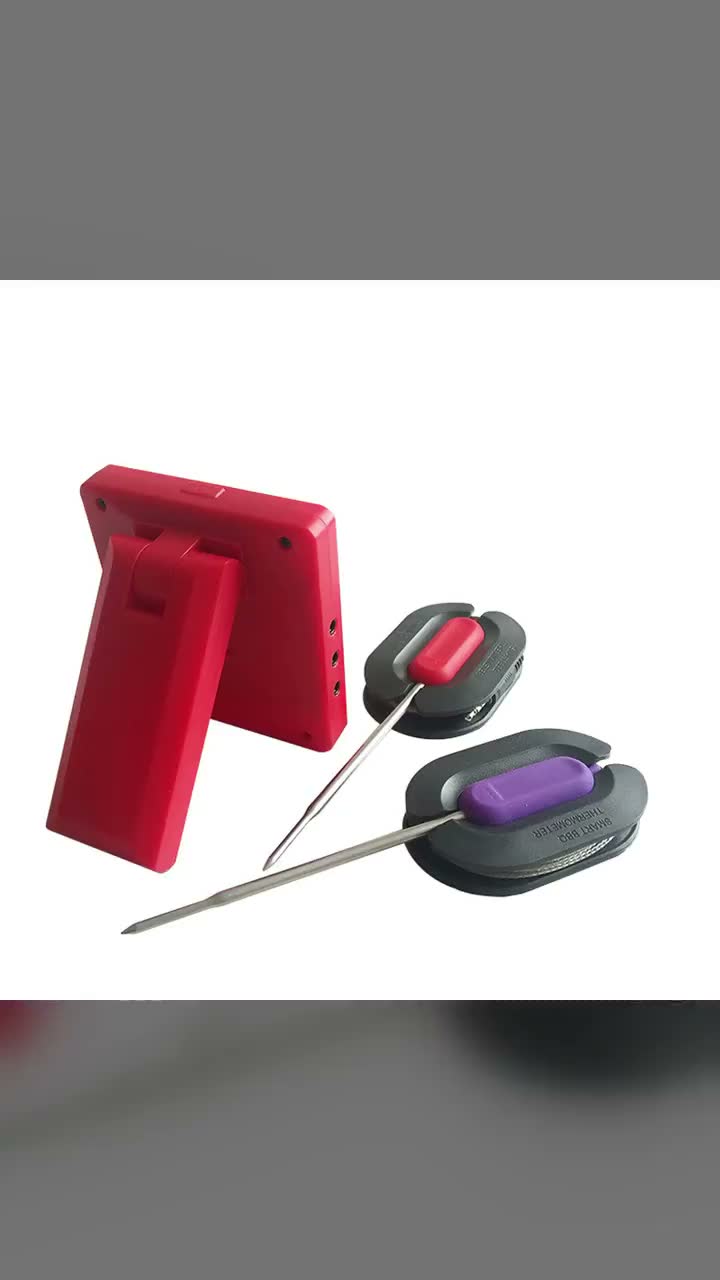 Long-Range Oven & Grill ThermometerUp to 100 ft indoors and 300 ft outdoors, shown on its LCD and in an app.Watch the reel →
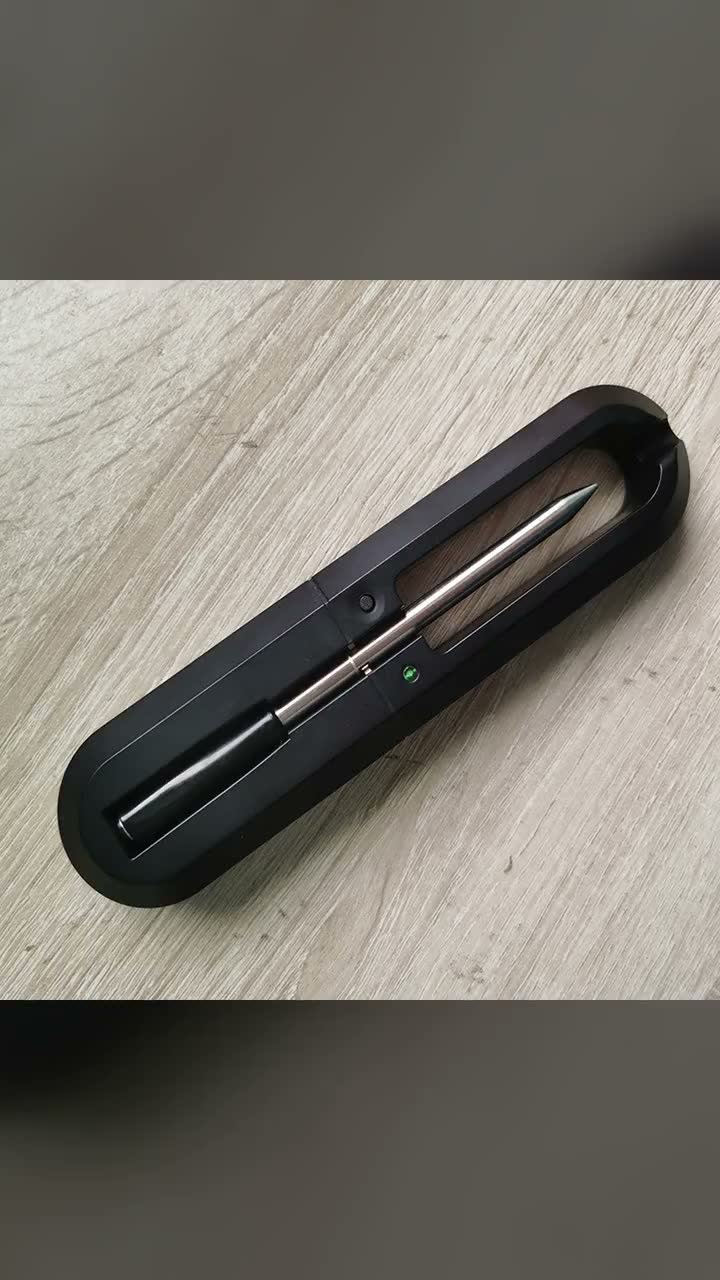 Bluetooth BBQ Thermometer, 2 ProbesApp with grilling modes and timers, two probes, about 30 m range.Watch the reel →
Care and accuracy
- Check accuracy in ice water. A probe in a glass of crushed ice and water should read about 32 °F / 0 °C.
- Clean the probe, not the transmitter. Wash the steel probe in warm soapy water. Do not submerge the electronic part unless the listing says it is waterproof.
- Mind the cable. Probe cables are heat-resistant, but keep them away from direct flame and do not pinch them hard in an oven door.
- Wash between raw and cooked. Clean the probe before checking another piece of meat to avoid cross-contamination.
More for the home cook
 Smart Kitchen ScaleAn app-connected baking scale for accurate recipes, in green or pink.Watch the reel →
 Self-Stirring Temperature MugMixes coffee, cocoa or shakes at the press of a button and shows the temperature.Watch the reel →
A thermometer makes a great gift for anyone who cooks. See more ideas in our tech gifts under $30, and browse kitchen gadgets in Home & Living. Food-safety figures above are from the USDA; follow your local food-safety guidance where it differs.