Tech explained
What mAh Means: Battery Capacity Explained Simply
mAh (milliamp-hours) measures how much charge a battery holds: a 2000 mAh battery could supply 200 mA for about 10 hours. To compare batteries of different voltages, use watt-hours (Wh = mAh × volts ÷ 1000). Real battery life depends on how much power the device draws.
Battery size is printed on almost every gadget listing as a number followed by "mAh". It is useful, but only if you know how to read it.
What does mAh mean?
mAh stands for milliamp-hours, a measure of electric charge. In theory, a 1000 mAh battery could supply 1000 milliamps for one hour, or 100 milliamps for ten hours. The bigger the number, the more charge the battery stores.
Estimating battery life from mAh
Divide the capacity by the device's average current draw:
| Battery | Device draws | Rough runtime |
|---|---|---|
| 300 mAh | 50 mA (small speaker, quiet) | about 6 hours |
| 2000 mAh | 400 mA (fan on medium) | about 5 hours |
| 2200 mAh | 300 mA (speaker, moderate volume) | about 7 hours |
These are rough estimates: volume, brightness, fan speed and temperature all change the draw, and listings rarely state it. When a listing gives playing time in hours, that is the better guide.
mAh vs Wh: the fairer comparison
mAh ignores voltage, so it can mislead when comparing different kinds of batteries. Watt-hours (Wh) measure energy:
Wh = mAh × volts ÷ 1000. A typical lithium cell is 3.7 V, so a 2000 mAh battery holds about 7.4 Wh.
Why power banks never deliver their full rating
A power bank's cells run at about 3.7 V, but USB charges at 5 V or more, and converting voltage wastes some energy as heat. Expect roughly two thirds of the rated capacity to reach your device.
 Rechargeable Handheld FanA 2000 mAh battery and USB charging for days out.Watch the reel →
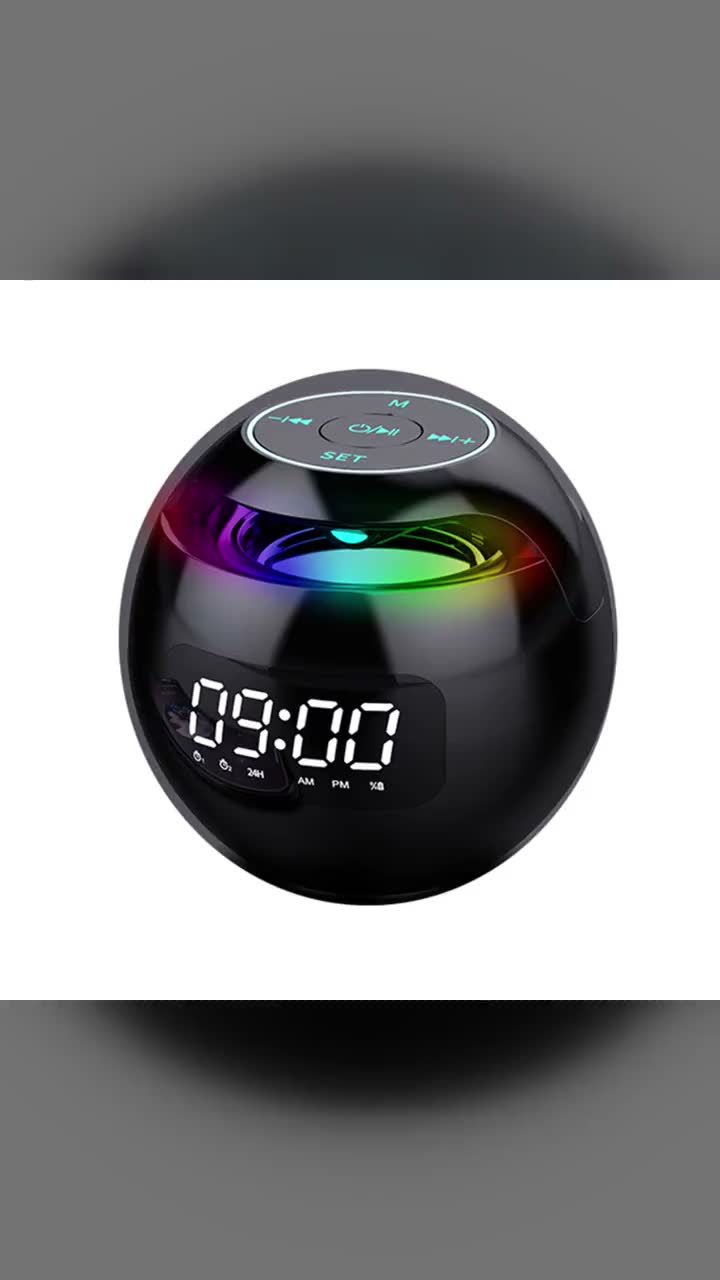 Alarm Clock Bluetooth SpeakerA 2200 mAh battery driving a 5 W speaker.Watch the reel →
 Sports Earbuds with 3500 mAh CaseThe large case can recharge the earbuds about 10 times.Watch the reel →
 Rotary Projection HumidifierA 400 ml tank with a 2000 mAh built-in battery.Watch the reel →
Taking batteries on a plane
Under the rules most airlines follow, spare lithium batteries and power banks go in your carry-on, never in checked luggage. Those up to 100 Wh need no approval. Devices with built-in batteries can usually travel either way, but check your airline before you fly.
Keeping a battery healthy
- Avoid heat: do not leave gadgets in a hot car or charge them under a pillow.
- Avoid storing a battery at 0% or 100% for weeks. Around half charge is best for storage.
- Day to day, staying roughly between 20% and 80% is gentle on lithium cells.
- Use a reputable charger and cable.
More on gadget specs: Bluetooth versions explained and IP water ratings explained.
Frequently asked questions
Is a higher mAh always better?
Only when comparing similar devices at the same voltage. More mAh means more stored charge, but a device that draws more power can still run for less time.
How many times will a power bank charge my phone?
Expect roughly two thirds of the power bank's rating to reach the phone, because some energy is lost converting voltage. A 10,000 mAh bank typically charges a 4,000 mAh phone about one and a half times.
Can I take a power bank on a plane?
Yes, in your carry-on bag. Under common airline rules, spare lithium batteries and power banks up to 100 Wh can go in the cabin without approval, and they must not go in checked luggage.
How do I make a battery last longer over the years?
Avoid heat, avoid leaving it at 0% or 100% for long periods, and use a decent charger. Keeping it roughly between 20% and 80% day to day is gentle on lithium batteries.