Smart home
Why Every Home Needs a Temperature & Humidity Monitor
Indoor relative humidity between about 40% and 60% is comfortable for most people and discourages mould and dust mites. A temperature and humidity monitor (a thermo-hygrometer) shows the real conditions room by room, and smart Wi-Fi versions alert your phone when a room gets too hot, cold, damp or dry.
Most homes have a thermostat in one room and guesswork everywhere else. A small temperature and humidity monitor shows what each room is really like, and that explains a surprising number of problems: dry skin, stuffy bedrooms, mouldy corners and plants that keep dying.
What the numbers mean
| Relative humidity | What it feels like and means |
|---|---|
| Below 30% | Dry skin, static shocks, scratchy throat |
| 40–60% | Comfortable for most people |
| Above 60% for long periods | Condensation, mould and dust mites become more likely |
Where a monitor helps most
- Bedrooms: for better sleep, especially in winter when heating dries the air.
- Nurseries: many parents follow the NHS suggestion of 16–20 °C for a baby's room.
- Bathrooms and basements: to catch damp before mould appears.
- Home offices: stuffy, warm rooms hurt concentration; a CO₂ reading tells you when to open a window.
- Plants, pets and collections: reptiles, instruments, wine and artwork all prefer stable conditions.
Why choose a smart (Wi-Fi) monitor
A simple display only helps when you look at it. A Wi-Fi sensor keeps a history and sends alerts, for example when a nursery gets too warm, the garage nears freezing, or the bathroom stays damp. It can also trigger routines, such as switching on a humidifier through a smart plug.
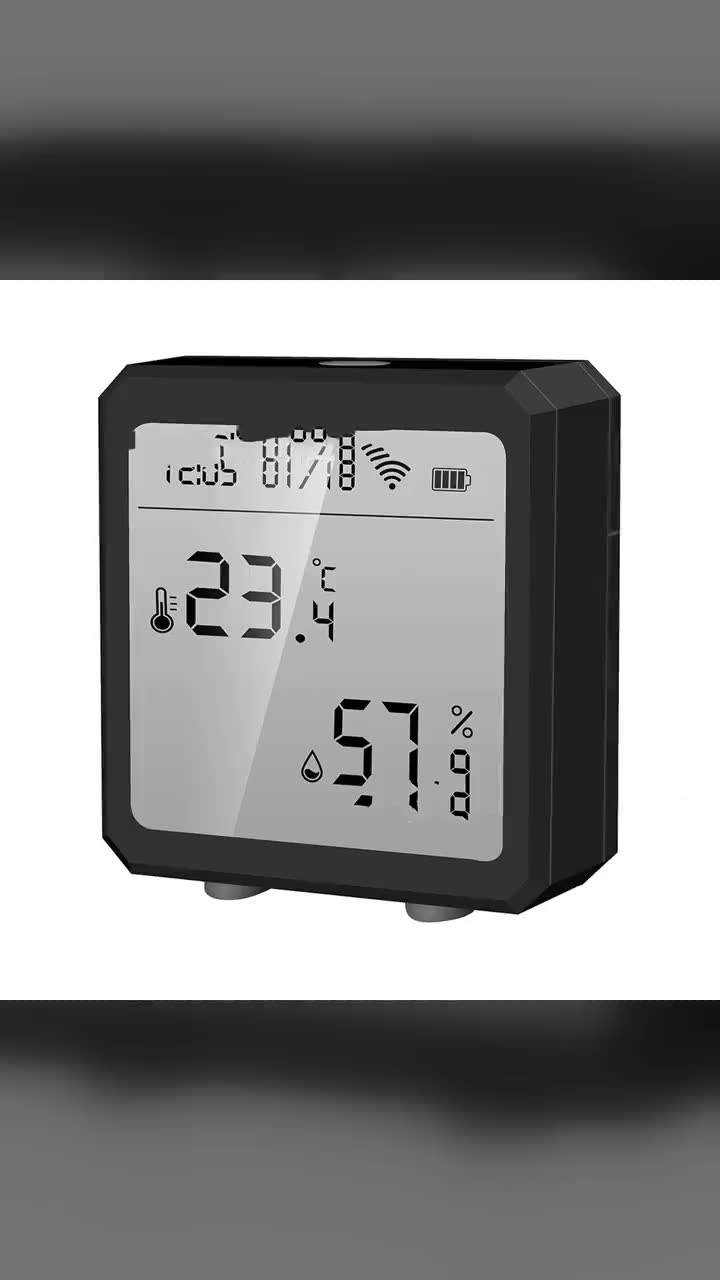 Wi-Fi Temperature & Humidity SensorApp alerts and history; runs on three AAA batteries.Watch the reel →
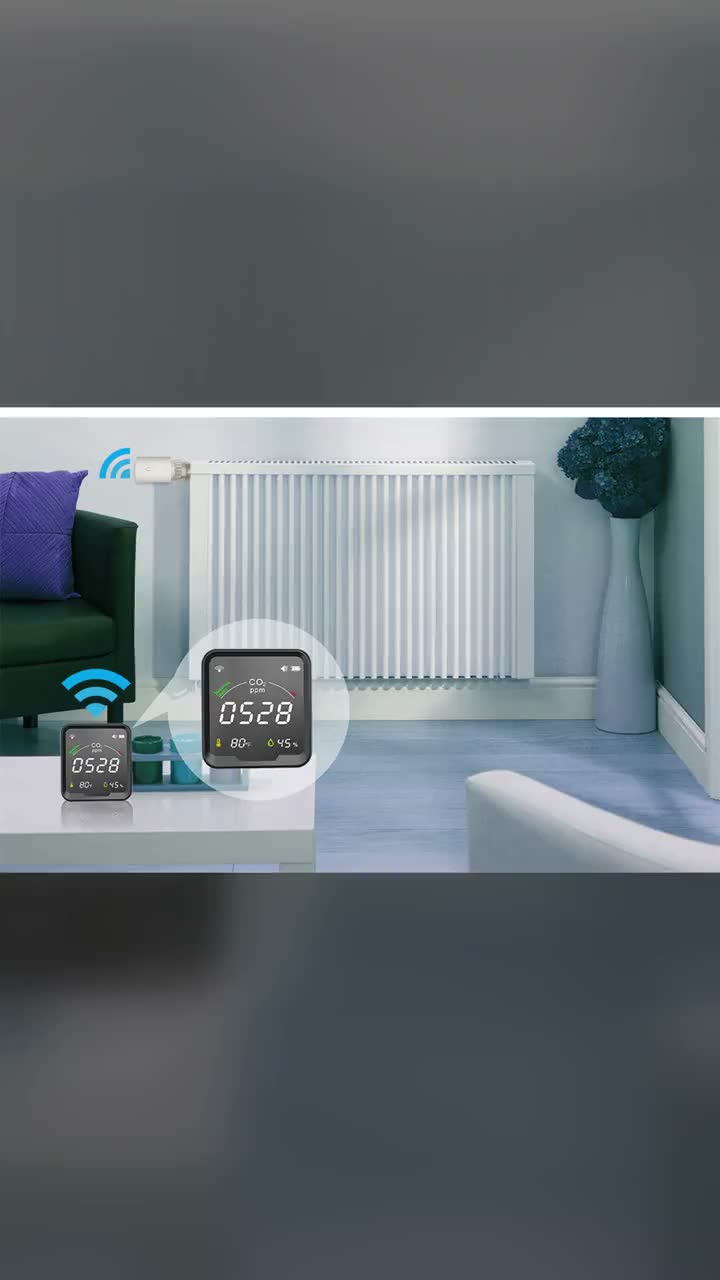 Colour-Screen Climate & CO₂ MonitorWi-Fi temperature and humidity plus a carbon dioxide alarm.Watch the reel →
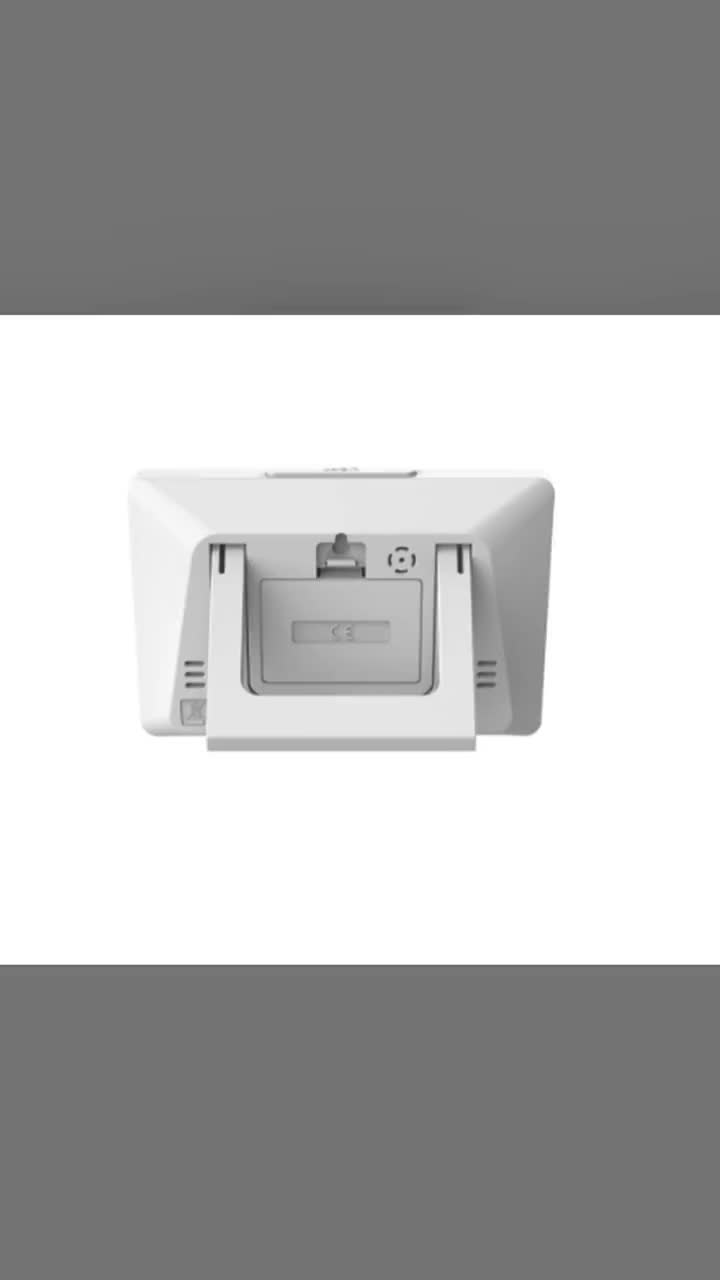 Indoor/Outdoor Thermometer & HygrometerShows inside and outside readings with daily highs and lows.Watch the reel →
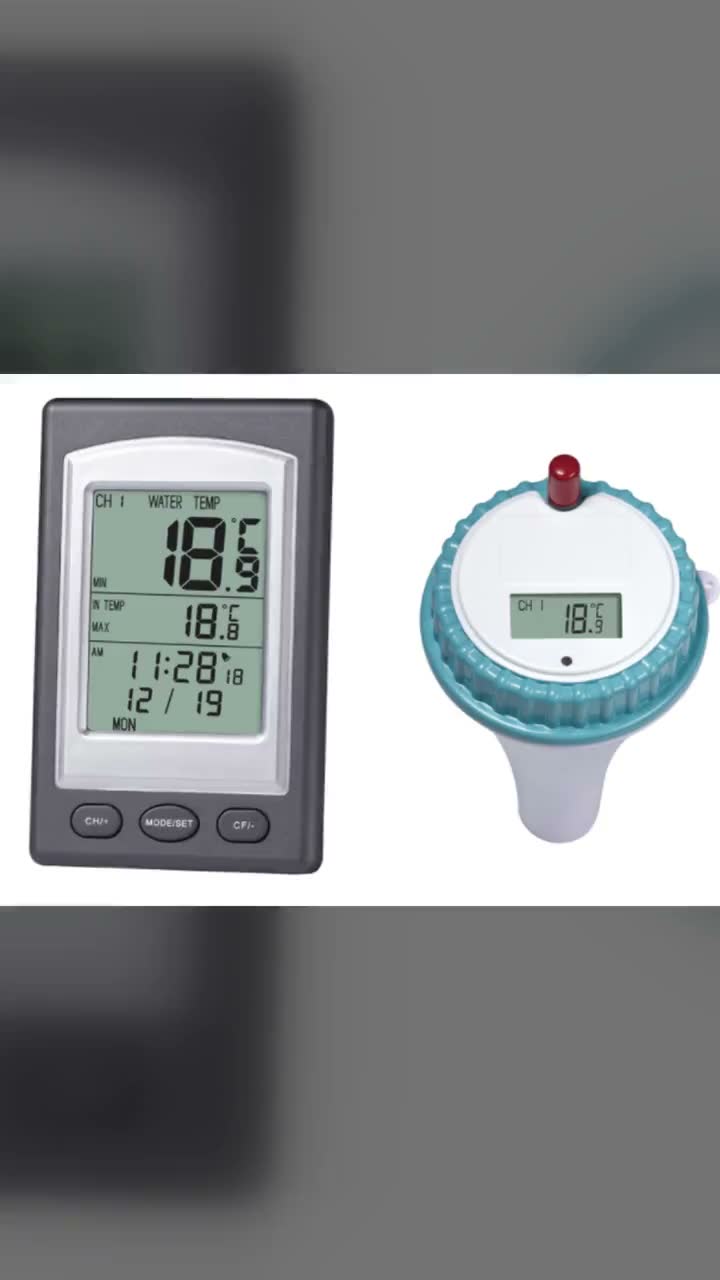 Pool & Hot Tub ThermometerA wireless floating sensor with an indoor display.Watch the reel →
Acting on what you see
- Too dry: use a humidifier, and lower the heating a little.
- Too damp: ventilate after showers and cooking, dry laundry outdoors, and use extractor fans.
- Too warm at night: open a window, use a fan, or lower the thermostat an hour before bed.
- High CO₂: open a window for a few minutes.
Placement tips
Put sensors at about chest height, away from radiators, direct sunlight, kettles and outside walls, so they read the room rather than a hot or cold spot.
Smart sensors usually need 2.4 GHz Wi-Fi: see why smart devices need 2.4 GHz.
Frequently asked questions
What is the ideal humidity in a house?
Around 40% to 60% relative humidity suits most homes. Below about 30% air feels dry; consistently above about 60% encourages condensation, mould and dust mites.
What temperature should a bedroom be?
Most people sleep best in a cool room. For babies, the UK's NHS suggests a room temperature of 16 to 20 °C (about 61 to 68 °F).
Why are my windows wet in the morning?
Warm, moist indoor air meets cold glass and condenses. It is a sign humidity is high for the outdoor temperature: ventilate, dry clothes outside or near an open window, and consider a dehumidifier.
What does a CO₂ reading tell me?
Carbon dioxide builds up when a room is poorly ventilated. Rising CO₂ in a bedroom or office is a cue to open a window; many guidelines treat levels under about 1000 ppm as well ventilated.